| Having trouble viewing this email? View it in your browser | | | |  | Preserving and Promoting Community Trails
in Western Pennsylvania | |
| | |
| | |    | 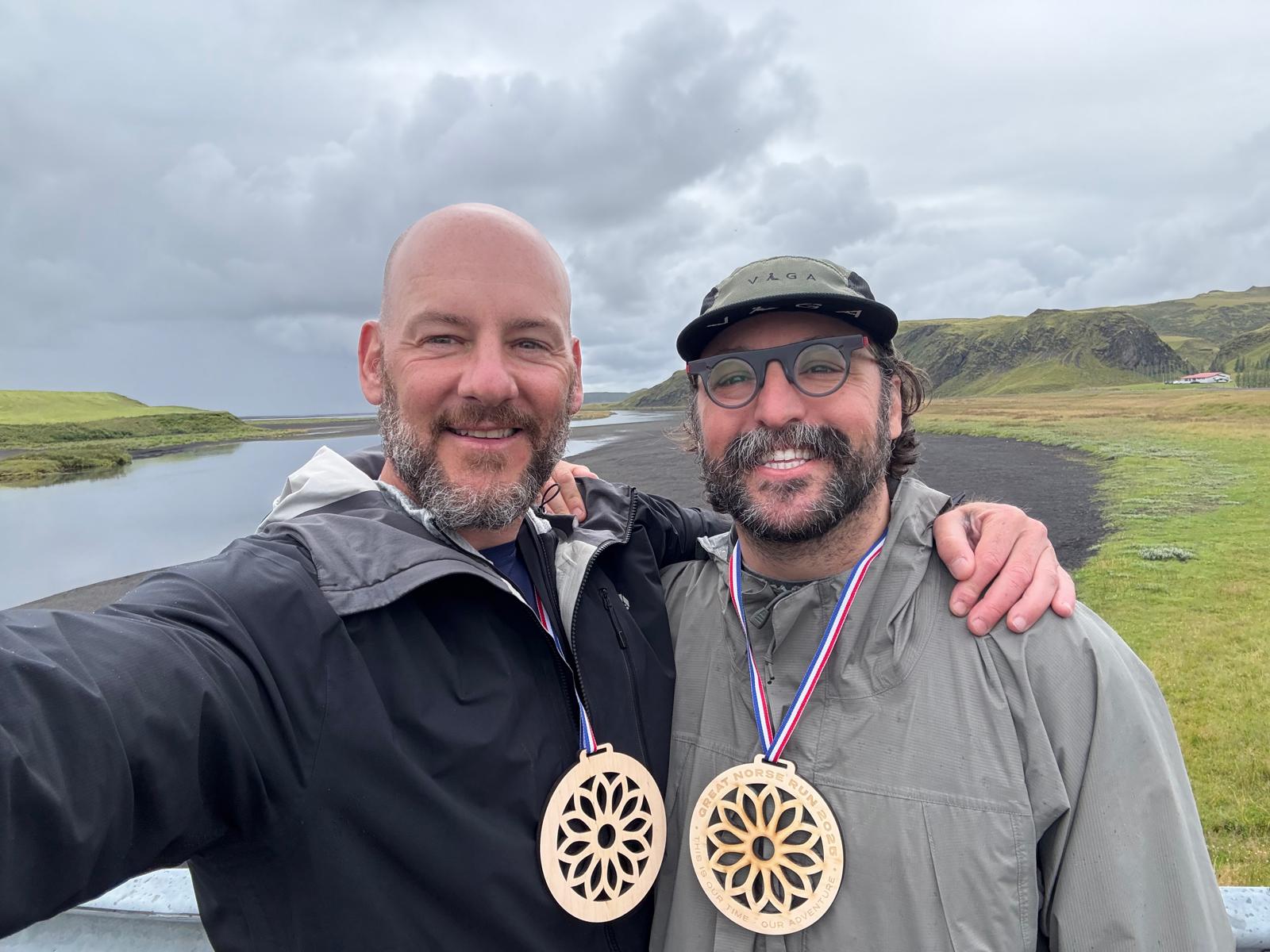 Dean and Adam in Iceland 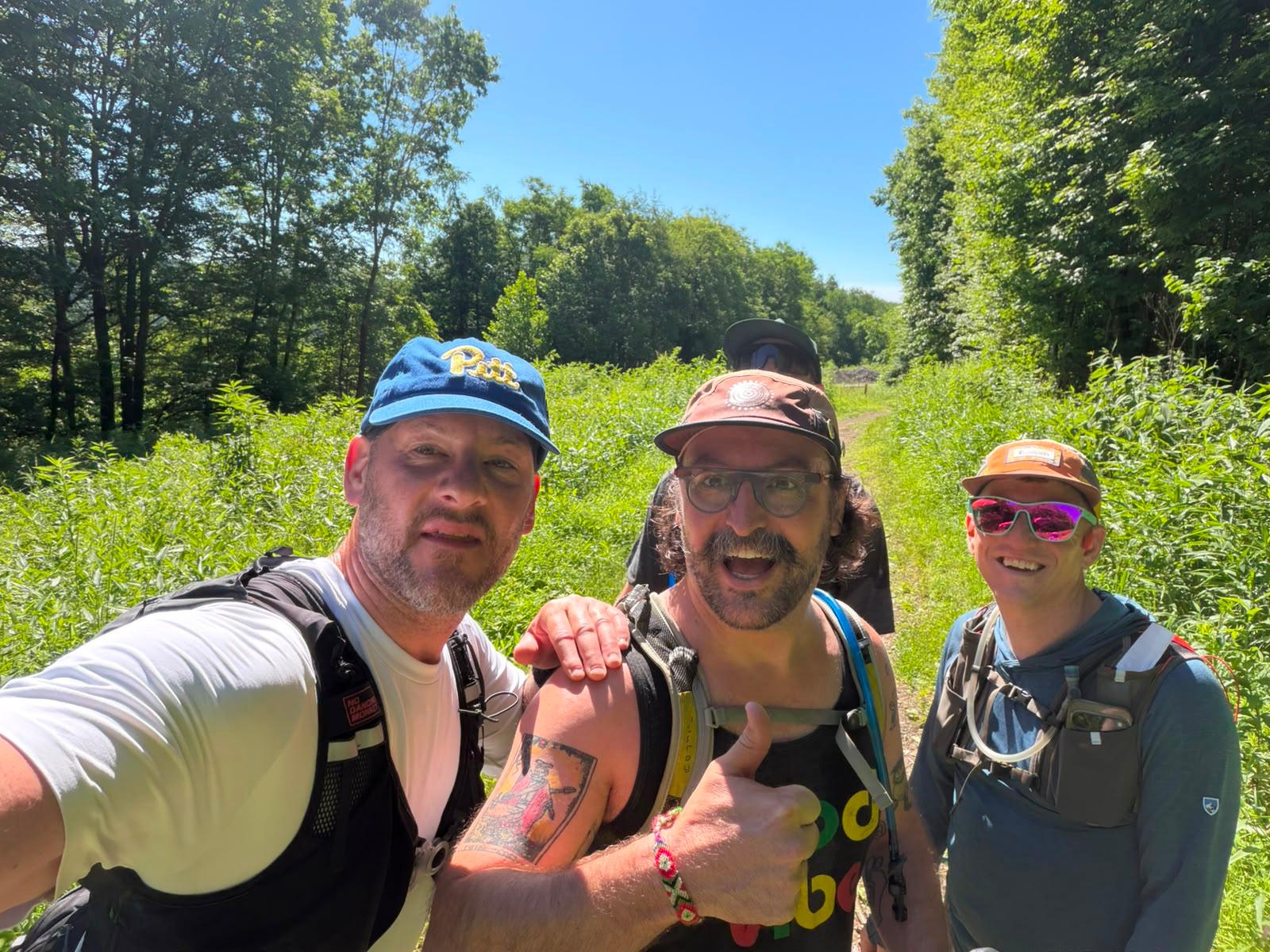 During the 2026 Challenge |  | From England to the Challenge via Iceland By Kathleen Ganster It’s safe to say that Dean Pearlman wins the award for “having come the farthest” to participate in the 2026 Rachel Carson Trail Challenge. Dean traveled from East Sussex, in the South of England for the June 20th event – roughly 3,750 miles. Dean’s route to Pittsburgh was anything but direct. He first heard of the Challenge in the summer of 2025 in Iceland, but it all started in England when the 51-year-old took up long distance running. “In 2018, I'd had a rough time, had mental health issues, put on a bunch of weight, and decided ‘enough was enough.’ I signed myself up for therapy - and a marathon - finished therapy, but kept on running,” he explained, “The distances got longer and longer and I was looking for a bigger challenge. That's when I found an event that traversed across Iceland from North to South. With a mixed group of people from all over, we hiked and ran across Iceland.” One of those people was Adam Causgrove from Pittsburgh - and that is how Dean found out about the Rachel. “We really hit it off. He's completed the Rachel on multiple occasions, and is a great fan of the route, and the event. We were talking about it in Iceland and I said that I'd love to do that one day with him,” Dean said. As fate would have it, participating in the Rachel may have happened sooner than Dean had anticipated. “It turned out that I ended up with a year off work and I was very much saying 'Yes!' to anything that came my way. So when Adam asked in early 2026 if I was up for coming over and doing the Rachel with him, I said ‘Yes!’" Dean has completed several marathons and ultras and likes to stay in what he called “marathon ready” shape. “I’m usually okay to grind out a run/hike to 50 to 60km (30 to 40 miles). The elevation on the Rachel was intense - next time I'd definitely pump the stair master machine in the gym beforehand, because we don't have much elevation where I live,” he said. Reflecting back on the event, Dean said, “I thought the Rachel was a wonderful route, through beautiful scenery and with a really welcoming and friendly crowd. The elevation over the distance, and the slight fear of the unknown meant I held back a little. Overall, I hiked more than I would have liked to - I would have liked to have ran more sections. But honestly, it doesn't really matter as I had a thoroughly pleasant time,” he said. Dean also praised the volunteers. “The aid stations were amazing, fully stocked and organized really well, and again, the marshals, and the people helping in the aid stations were incredible. It's a real feel good event,” he said. Dean’s friend, Adam Causgrove, who has completed the Rachel multiple times, was eager to share the experience with his now good friend. “We had a lot of time to chat while crossing Iceland on foot. Dean and I were tent buddies, so we had a lot of time to talk about life, the future, all the big things. And when we inevitably discussed finding a way to get together in the future, I shared info about my favorite event of the year - THE RCT Challenge!” he said, “I was able to visit him and some of the other UK folks in Cambridge last Fall, but getting to share such a meaningful event with him and Jason was really special.” Adam referred to yet another friend whom he recruited for the Rachel, Jason Norman, who came in from Charlotte, NC to round out the threesome. Why the Rachel? “There’s something really special about pushing your body to its limit to see what you can accomplish. And every year is a new experience - I am a year older, the weather is different, the direction changes, the people we encounter along the way... I know I've done five or six Rachels, but it has never really felt repetitive at all. We change a bit every year, the Rachel changes a bit every year, but the great vibes, the highs and lows, and the people sharing the space always come back - it's always more and more special. I feel fortunate to be a part of this community and am so grateful to all the people who make it happen,” Adam said. Since Adam is getting married in Italy in mid-june of next year, the 2027 Rachel is probably off the table for the friends, but they both forsee one in the future. “I think it's going to be unavoidable to participate again. Adam loves this event, and we are very good friends now, I know he will ask me, and I know I will say ‘yes!’” Dean said. |
 Kathryn Noorbakhsh By Kathleen Ganster Completing the Rachel Carson Trail Challenge is an accomplishment for anyone, but completing it 21 times? Well, that is an achievement that only one person can claim. Kathryn “Kathy” Noorbakhsh completed her 21st Rachel this past June making her the person with the most successful completions. But Kathy quickly downplays her achievement, stating that she “isn’t anyone special, just a stubborn old lady!” Kathy completed her first Rachel in 2003 with her brother, Mark Ungerman, who “had talked her into it.” Since then, the Rachel has been on her list as one of her must do events each year. “I plan my other events and activities around it,” she said. An avid runner, Kathy also participates in the Pittsburgh Marathon and has hiked all over the world including on Mt. Blanc and in Uganda. She also recently completed climbing Mt. Kilimanjaro for the sixth time, this time with her 16-year-old grandson. Since her early years on the Rachel, Kathy has seen great improvements to the trail. “The trail conditions now are amazing – the blazing is great. I can’t imagine anyone getting lost on it these days,” she said. Another change in the Challenge is the length, something many long-time participants mention. “When I started, it was 34.2 miles and now it is over 37. And now I’m much older,” the 67-year-old laughed. The event itself has also evolved since 2003 Kathy said. “There seems to be a much wider net of participants. I feel like when I first started, most people came from within driving distance,” she explained, “Now there are people from all over and many other states.” Kathy begins her training on January 1st to run the Pittsburgh Marathon each May, then continues hiking until the day of the Rachel. She also does kettlebell training, scuba diving and other activities – such as her Kilimanjaro treks. Like many participants, Kathy prefers the Harrison Hill to North Park route. “I label them ‘hard’ and ‘harder,” she said, “But I do prefer to finish at North Park.” In all of her years of participating in the Challenge, Kathy said the “hot year” – 2024, the year of record breaking temperatures – was one when she almost didn’t participate. “But I just felt like I really needed to be there and I thought that I would just do what I could do,” she said. Kathy was one of the 45% who successfully completed the event that year. Kathy is quick to downplay the fact that she has more successful Rachels than anyone else. “It’s a lot of pressure,” she joked, “Really, it doesn’t matter. It is cool, sure, but it something that I can do and I love doing it.” Although Kathy’s brother no longer participates in the Rachel, other family members help out - her daughter or daughter in law will drop her off in the early morning for the start and then she will call her husband as she nears the end to meet her at the finish. This year, her son was also there. “I’m truly lucky to have such a supportive family,” she said. Kathy also credits the volunteers for their support of the event. “The organizers, the trail stewards and the amazing volunteers are the unsung heroes of this event,” she said. With the 30th anniversary coming up in 2027, of course Kathy plans on being there. “I will do it as long as I can. I love the event and it is just so well run. I just go out there and know that I’m going to have a long day,” she said. |  | 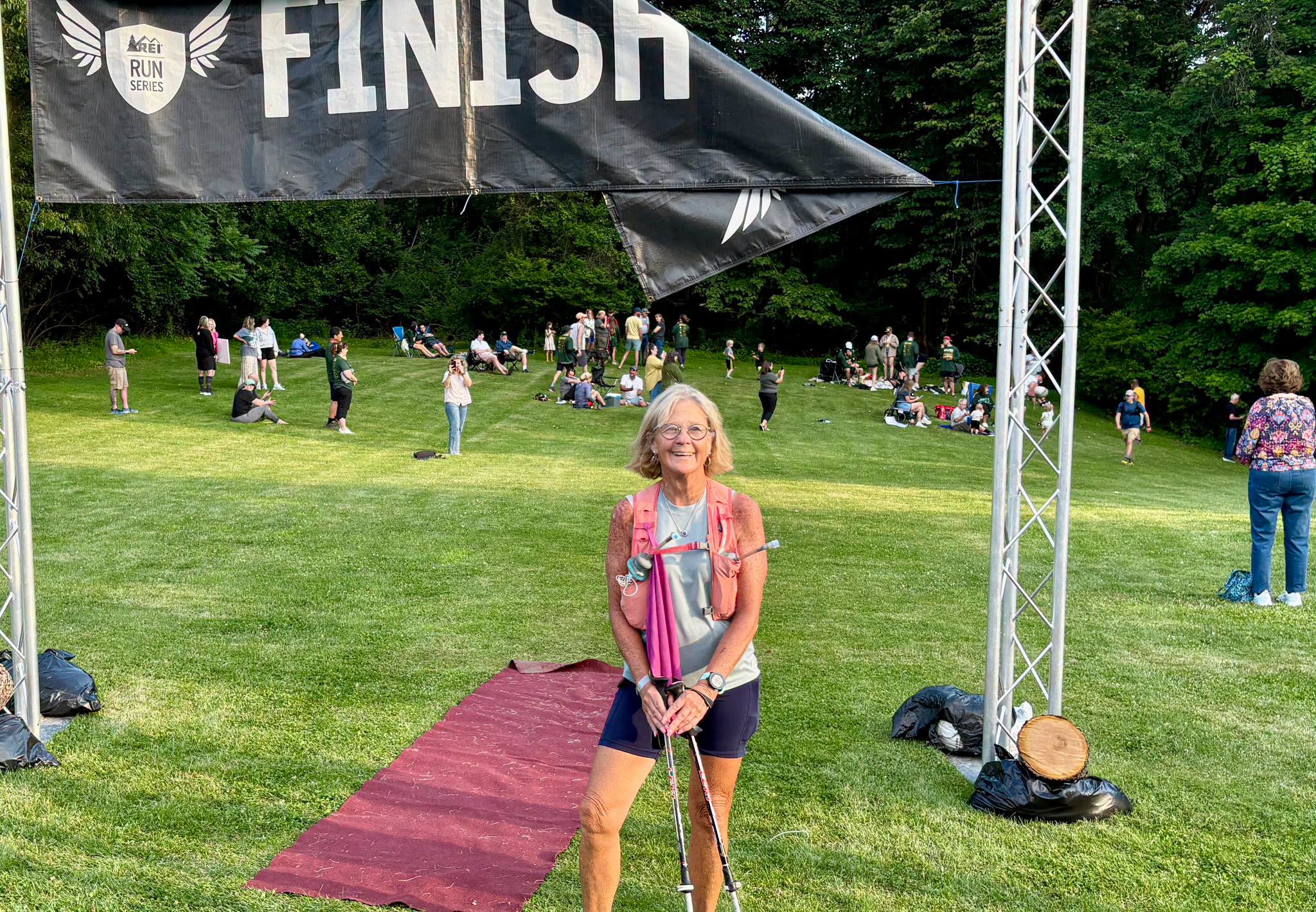 Kathryn at the Challenge finish 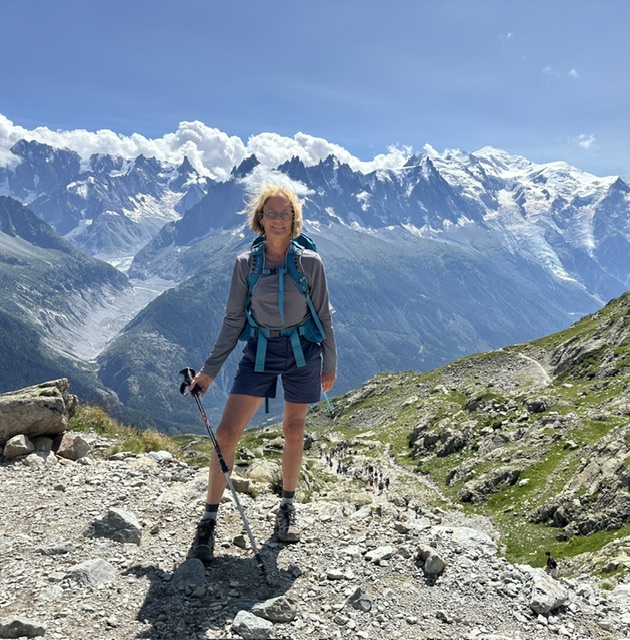 Higher hiking helps |
| | Hiking in Your 70s: The Good, the Bad and the Ugly By Bob Reiland If you happen to be young, why would you care about hiking in your 70s? I have been surprised to learn that many young people do care. When I have talked about hiking the RCT Challenge in my 70s, three people in their 20s and 30s responded saying, “I want to be you when I grow up!” Three others said in different words that they hope to be like me when they are older. Some have used my example to motivate their parents to work more on fitness. Is a person in their 70s old? I can’t do many of the things I did in my 20s and 30s now, but I don’t feel old or even know what such a feeling would be like. I can still hike 18 or more miles at a time over the RCT hills. It’s not easy for me but doable if I keep in shape year-round. Those of you much younger in good health can take winter off from training and with serious training, complete one of the RCT Challenge events. Those over 70 need year-round training. This is the good part. It is possible for many of us to do distance hiking on challenging trails in our 70s. If you are in your 20s or 30s and love to hike, you have many years of enjoyment to look forward to. The key is to keep doing it. How did I get here? I had asthma so bad that I almost died from it in my early years. By the time I got to high school the risk of dying was long past, but I wanted to be able to keep up with other kids, and I decided to go out for track my freshman year to build up my lungs. It worked, but the price was intense asthma attacks when running outside early in the season. Asthma didn’t tend to bother me in warm weather. I only had to keep going until things got better. I wasn’t good at running but learned to love it, and I kept it up for 50 some years until getting serious about hiking. But hiking 34 to 37.5 miles in one day seemed crazy. After volunteering in the RCTC and helping in the last check point of a Challenge in 2016, I was convinced that the worn-out hikers coming through were doing something I would never do and couldn’t do. But I was also starting out as a trail steward and wanted to learn the entire RCT. The easy way was to hike it on Orientation and Training hikes. Eventually I found that I was conditioning so well that as the Training Hikes got longer, I was going at the same pace or even faster. If I got in hiking shape over the winter, I might be able to complete the Challenge. In 2018 I started and completed my first Challenge at age 70. That was incredibly difficult! I hiked through pain and fatigue and through mud after heavy rains came at my halfway point. This is part of the bad. Many more people can hike 5, 10 or 15 miles at a time in their 70s, but few will find it easy to complete the Full Challenge. Then again you don’t need to in order to enjoy distance hiking. Do what you enjoy. Most of the bad part about hiking or trying to hike in your 70s is that you learn about bodily limits more than ever before. Unless you are unusual, you will hike at a slower pace each year. I didn’t slow much from year to year in my 5 completions, but I did get slower. It also seems in my case and in looking at results of other hikers that there is typically a big drop in pace somewhere after age 73 and more definitely after 75. My last completion was at 75. The next year I had severe knee pain that was eventually solved at an orthopedic practice. But then there were many problems with my feet. The body is wearing out in your 70s if you’ve used it a lot over a long time. Another problem for hikers over 70 that shows up much earlier is that if you get sick or injured, recovery time is much longer than when you were younger. The oldest hiker to finish the Full Challenge is Jim Antoniono, who amazingly did it at age 77 with Achilles Tendon issues! Those got worse, and Jim has since Perhaps temporarily retired from Rachel Challenges. From what I’ve seen of other hikers in our 70s Jim’s achievement was more than amazing. And he set the age record 3 years in a row at ages 75, 76 and 77. Here's more good news. The number of people 70 and older hiking the Challenge in recent years has grown considerably, and Jim isn’t the only one to blast past age expectations. For the first 23 years of the Full Challenge no one over the age of 73 finished. In 1921 Jim Antoniono finished at age 75. Since then three of us finished at age 74, four, including Jim, finished at age 75. Bob Webb joined this group as the oldest finisher this year. And of course Jim made it at 76 and 77. Clearly hikers are staying fit longer than ever before. One of the reasons that more distance runners and hikers are active in our 70s is that we have learned more about the importance of good nutrition. Basically we should eat plenty of fruits and vegetables every day and minimize consumption of processed foods. Another is the research that shows that interval training reduces mitochondrial damage in muscle cells. This is really amazing! Interval training has been shown to change muscles at the cellular level so that the cells can process energy more efficiently. Running, hiking, biking, lifting weights and other activities done with intensity followed by short rest periods in multiple intervals increases our ability to stay active as we get older. This is not something that you should wait to do until you get older. In fact you shouldn’t start this when older without first checking with your doctor, and always do a good warmup before starting interval training. After thinking about interval training, I wondered what it would do for heart health. It does a lot! Your heart will respond by pumping more blood more efficiently and your resting pulse rate and blood pressure will be lower. Arterial blood vessels will become more flexible. These changes improve longevity. For those of us who hike the Rachel Carson Trail it’s good to know that the many hills provide a natural type of interval training. Our muscles are pushed hard on the way up the hills, and we get relative rest on the way down and on the level parts of the trail. Even with the advantage of hill training, resistance training with weights or machines is essential to hiking longevity. What about the Ugly? Anyone who started the Full or Homestead Challenges in 2024 or 2025 knows about those. In 2024 it was intense sunlight and temperatures in the mid 90s. It was burning hot! Less than half the starters finished when normally slightly over 80% finish. With my knee issue reducing training time I didn’t have a chance. In 2025 it was the ever-present and deep mud. I was trying to match Jim’s record and might have made it in conditions like we had this year, but the mud did me in. Ten of us in our 70s started the Full Challenge, but only Doug MacPhail, age 72, finished. Normally most of those starting in their 70s finish. It has something to do with experience. This year included some of each of the good, the bad and the ugly for me at age 78. After last year, I wanted to enjoy hiking more and opted for the Homestead Challenge, also known as the Half Challenge. Then I got extremely sick in early April and spent 5 days in the hospital not able to walk without help. That was even uglier than the mud of the previous year. Even making 17.9 miles looked out of reach for nearly 4 weeks until I was able to get serious about hiking again. The bad part was the last 2 Training Hikes. I finished the second last but couldn’t have made it without a lot of help from my friend Leigh Paich. I didn’t finish the last training hike. Finishing the Homestead was definitely going to be a Challenge and not as sure as I had expected before getting sick. The good part was that hiking conditions were perfect, and I paced myself nearly perfectly and finished well under the official time limit and not totally worn out. Another good thing is that the hiking community is incredibly supportive. Even in those good conditions, I wouldn’t have made it without the support of many other hikers on the Training hikes and during the Homestead Challenge itself. Of course, in trying to demonstrate that I wasn’t worn out, I made the mistake of trying to jog the last 50 yards up the hill to the finish. Suddenly my right calf muscle cramped and I went down. Oops! After a minute or two of massage, I got up and walked to the finish. The more serious point in all of this is that most people can stay more active than has been expected into their 70s and possibly 80s and 90s. Enjoy hiking! |
Trail Access: A Smart Investment for Landowners By Ed Engler When we talk about trail access across private property, many landowners understandably ask, "What's in it for me besides liability?" It's a fair question. While trails bring undeniable community benefits—connecting neighbors, promoting health, protecting green spaces—landowners deserve to know how trail access directly enhances their property value and protects their interests. Recent research on pedestrian infrastructure reveals insights that apply directly to trail access. The evidence is compelling: properties with walkable access to trails and recreational amenities consistently command premium prices in the real estate market. The Property Value Premium The National Association of Realtors reports that properties with walkable access to trails and parks see measurable increases in market value1. Real estate research shows that homes in walkable neighborhoods with pedestrian infrastructure can see property value increases ranging from 5% to 20% compared to similar properties without such access. For trail-adjacent properties in Western Pennsylvania, this translates to real dollars. Walk Score research demonstrates that walkability has become a top consideration for families and buyers of all ages. Trails are fundamental infrastructure that creates this walkability—connecting neighborhoods to schools, parks, and community amenities without requiring a car for every trip. This matters particularly for the 25-30% of the population who cannot legally drive, including children under 16, people without a car, many elderly residents, and people with disabilities. Families have different high priority features depending on their circumstances. When young families evaluate properties, they seek safe routes to school and easy access to parks. When aging couples seek to age in place, they also seek safe places to walk to. With everyone asking: "Can everyone in our household access the community safely?", Properties with trail access answer that question with a resounding yes. Protected, Not Exposed: Understanding RULWA Here's what many landowners don't realize: Pennsylvania's Recreational Use of Land and Water Act (RULWA) actually protects landowners who allow trail access. Under RULWA, when you explicitly permit recreational use of your property, your liability doesn't increase2. Trail users are treated similarly to trespassers in terms of liability—you're not obligated to make the land safe or warn of dangerous conditions. Pennsylvania strengthened RULWA specifically to encourage landowners to keep their land open for recreation. Without this protection, the state recognized that rational landowners would simply post "No Trespassing" signs rather than risk litigation. RULWA ensures that being a good neighbor and supporting trail access doesn't create legal jeopardy. The Natural Surveillance Effect Trails create what urban planners call "eyes on the street." Regular pedestrian activity—hikers, joggers, dog walkers—provides natural surveillance that deters crime and vandalism3. Research shows that areas with regular pedestrian traffic experience significantly lower property crime rates compared to isolated areas. For rural and suburban landowners, this means trails transform potentially isolated property edges into actively monitored community spaces. The hundreds of RCTC members and thousands of annual trail users become informal stewards of your land. The Community Connection
Properties along the Rachel Carson Trail, Baker Trail, and Harmony Trail aren't just land parcels—they're gateways to 170 miles of Western Pennsylvania's most beloved recreational infrastructure. As trail use grows, these properties become increasingly valuable amenity access points. Supporting trail access isn't just good citizenship. It's a sound property investment that enhances value, clarifies liability protections, and positions your land as part of a desirable, connected community. When the time comes to sell, trail access is an amenity that resonates with today's buyers—families seeking active lifestyles, aging adults planning to remain in their homes, and anyone valuing quality of life over car dependency.
The research is clear: trails benefit everyone. But they may benefit landowners most of all. 3 https://www.planetizen.com/blogs/96396-eyes-street
2 https://library.weconservepa.org/guides/81-guide-to-pennsylvania-s-recreational-use-of-land-and-water-act
1 https://www.nar.realtor/magazine/real-estate-news/survey-buyers-may-pay-more-to-live-in-walkable-com
munities | | |
| | How I Got Involved By Elizabeth Stephens Volunteering for the Rachel Carson Trail has become something that means a lot more to me than simply helping maintain a trail. I have always loved being outdoors, running, hiking, and challenging myself on the trails around Pittsburgh, so being able to give some of my time back to a place that gives me so much feels incredibly rewarding.
My volunteer section is at Agan Park, and I have really enjoyed having a specific area of the trail that I can take care of and feel connected to. There is something satisfying about clearing the trail, checking its condition, and knowing that the work I am doing will help make someone else's hike or run a little safer and more enjoyable. Every time I work on my section, I feel a sense of ownership—not in the sense that the trail belongs to me, but that I have become part of the community responsible for protecting it.
The Rachel Carson Trail has also shown me how much work happens behind the scenes to keep a trail available for everyone. When you are running or hiking, it is easy to pass a cleared section, a trail marker, or a maintained pathway without thinking about how it got there. Volunteering has given me a completely different appreciation for the people who have spent years caring for these trails.
I also love that volunteering combines several things that are important to me: being outside, staying active, helping others, and contributing to my community. Trails have given me a place to challenge myself physically, clear my head, experience nature, and make some incredible memories. Maintaining my section at Agan Park is one small way that I can help make sure other people have the opportunity to experience those same things.
Probably my favorite part is seeing the difference after the work is finished. A section that was overgrown or difficult to navigate suddenly looks inviting again. Knowing that hikers, runners, families, and other trail users will pass through something I helped care for makes the time and effort worth it.
Volunteering for the Rachel Carson Trail has made me feel even more connected to the trail system and the people who love it. I may only be responsible for one section at Agan Park, but it feels good knowing that my small contribution is part of something much bigger.
And, of course, there is always another mile of trail waiting. |
| |
 | | |
| |
|






